Blog
 5 Park Home Ave #130, North York, ON M2N 6L4, Canada
Blog Categories
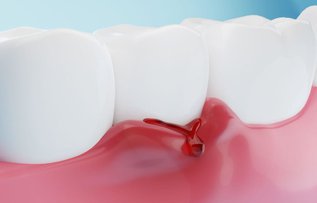
Why Your Gums Bleed When You Brush and What It Means
Bleeding gums when you brush are inflamed. That is what the bleeding means, and it is almost never a sign that you are brushing too hard. Healthy gum tissue doesn't bleed when a soft brush passes over it, just as healthy skin doesn't bleed when you wash it. In most cases, plaque along the gumline is the cause; the condition is early gingivitis, and it can be completely reversible within one to two weeks with proper cleaning. If the bleeding persists after two weeks of genuinely good home care, the problem has moved past what brushing can fix and needs to be addressed. The distinction between those two situations is what this article is about.
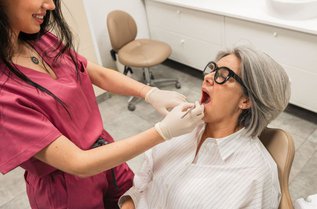
Cold Sore or Canker Sore? How to Tell Them Apart and What to Do About Each
A canker sore is a small ulcer that forms inside your mouth, is not contagious, and is not caused by a virus, while a cold sore is a cluster of blisters that appears outside your mouth, usually on or near the lips, is very contagious, and is caused by the herpes simplex virus. Both are painful, both usually heal on their own within one to two weeks, and both are common. But because they have different causes and one can spread to other people, telling them apart changes how you treat them, how careful you need to be around others, and when it is worth having a dentist take a look.
Professional Teeth Whitening in North York: What to Know Before You Brighten Your Smile
If your teeth have slowly gone from white to dull yellow over the years, professional teeth whitening in North York is the fastest, safest way to get that brightness back, and it works far better than anything you can buy at the drugstore. A single in-office session with a dentist can lighten your teeth by several shades in about an hour, while a custom take-home kit brightens them gradually over one to two weeks.

Cosmetic Dentistry in North York: A Complete Guide to Your Options
Whether it is a chipped front tooth in every photo, years of coffee stains, or a gap you have never liked, cosmetic dentistry in North York can fix the one thing that makes you hide your smile, often faster and for less than you expect.
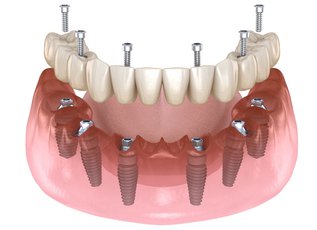
All-on-X Dental Implants: How Full Arch Digital Dentistry Works and Differs from All-on-4
As a full-service dental clinic, North York Smile Centre offers All-on-X, a modern approach to replacing a full arch of missing or failing teeth with dental implants and a fixed prosthesis. It delivers the same life-changing result that made All-on-4 well known: permanent, natural-looking teeth placed on the day of surgery. The difference lies in how treatment is planned and produced.
What Does the Canadian Dental Care Plan (CDCP) Cover in 2026? A Patient's Guide
The Canadian Dental Care Plan (CDCP) covers a broad range of standard dental care. In 2026, for the first time, it will be open to eligible residents of all ages. How much of your bill the plan pays depends on your family income, and depending on your dentist, you may still owe a co-payment and, in some cases, a fee difference. This guide explains exactly what is covered, who qualifies, what you can expect to pay, and how the CDCP works at North York Smile Centre.